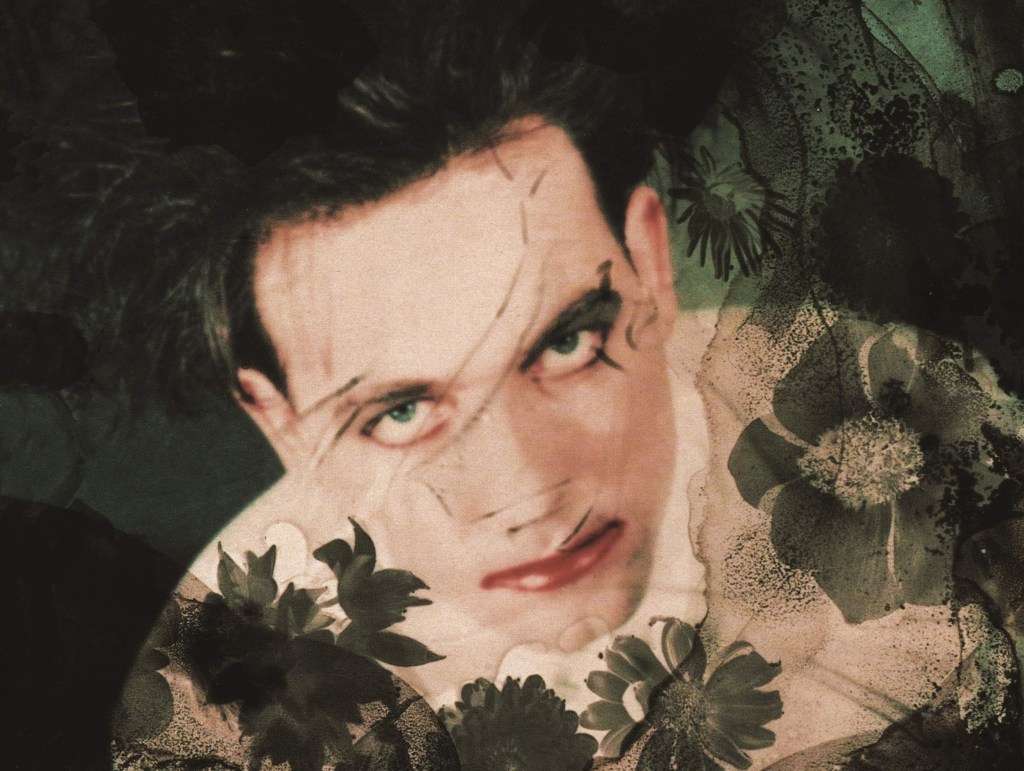
Representing my home county of West Sussex, enter The Cure. I’ve seen many labels associated with The Cure, but the predominant one is emo. Initially, it was difficult to see why. The opening track, Plainsong, begins with a couple of minutes of slow, grandiose chords, which could almost be described as ambient if not for the slightly TXH-ish bass at the forefront the sonic landscape*. (I think it’s an electric double bass, which would be fun if I’m right). Then, Robert Smith started singing and the emo label became clear; the lyrics are deeply unhappy. This was not initially clear, as the vocals are mixed with so much delay, it becomes akin to three people talking over each other so I had to look them up. The good news is that Plainsong is the only song that has this mixing issue.
Tracks 2 and 3 are similar to each other; slow and brooding, contrasting their major keys (the same major key, they’re both in A) with lyrics full of pessimism and despair. It’s not a jarring contrast by any means though, it seems natural and almost inevitable. Additionally, the sounds of the instruments and vocals, the way they interact with each other and the way they’ve been mixed, is among the best I’ve heard so far. Vocals in the first track aside, it all comes together in a near-perfect wash of audio, that my brain is insisting I describe as “creamy”.
Lovesong arrived just at the point I was thinking Disintegration could do with an injection of energy, and delivered it. It introduces some positivity in the lyrics to boot, though not entirely without the pervasive, underlying gloom. Last Dance followed, and for the first time, the long runtimes started to feel like a bad thing. The intro stretches on for nearly two minutes, and unlike the first four tracks, the material isn’t strong enough to sustain itself for that length of time. I can’t put my finger on why; the music is fairly simple in all cases. I think there’s just an awkward chord movement in this track that ruins it for me. In general though, all the songs so far have a strange, hypnotic quality that makes them seem shorter than they really are.
There is a break from the reverb-soaked wash in the form of Lullaby. There is also a break in the nebulous pessimism that’s characterised the lyrics up to this point, replaced by a much more specific nightmare of being eaten (and possibly sexually assaulted) by The Spiderman. I don’t know if The Cure were aiming for a connection with the superhero, but either way, I choose to make that connection because the idea of a spandex-clad crime fighter climbing through windows and eating people is quite funny to me. Halloween is approaching as I write this, and Lullaby is a fitting song.
Disintegration is incapable of introducing singing any earlier than 90 seconds into a song, it seems. Fascination Street went nearly half its five minute length without a peep from Smith. This would be more of a problem if the instrumental backing was not, as established, interesting and satisfying on its own, but in this track in particular it felt quite excessive.
Prayers For Rain is the absolute peak of emo. The lyrics “infectious sense of hopelessness” could sum up the whole album, or even the whole emo movement. This is the first song where the misery started to seem slightly self-indulgent and pretentious; where the other songs had a strong sense of authenticity and lived experience (with the exception of Lullaby), Prayers For Rain seems more exaggerated and performative. Not hugely so, not to the point of ridicule or absurdity, but that’s how I interpreted it.
Partway through the nine minutes of The Same Deep Water As You, the endless lamentations became quite wearing. The hypnotic, song-shortening quality is still in effect, but not enough to save either this song or the title track from dragging quite significantly. I wish they’d introduce a B section. When songs run this long, they *need* to change to avoid this fate. It shouldn’t be this difficult to either write more of the song or trim some of the fat. Homesick is the third culprit in a row. The vocals don’t show up until more than three minutes in; it would have been a complete piece of music if it had ended at the same point. It does have the saving grace of including a piano for the first time, showing Disintegration isn’t completely out of ideas. The final track, Untitled, however, shows that at this point, it *is* out of ideas. Apart from the accordion that adorns the beginning and end, there is nothing in Untitled I hadn’t already heard, at length, on the album.
Disintegration is in need of a good editor. It has all the foundations of a really good album; I was liking it quite a lot up until the halfway mark, but it’s weighed down by a number of overlong dirges that stretch their ideas beyond the point of usefulness. This is a recurring theme in these reviews, I don’t know if it’s because I’m young or because my brain is just wired in such a way that lengthy, repetitive songs don’t appeal to me, but I can’t seem to escape from them. The lyrical unhappiness doesn’t help either, the “infectious sense of hopelessness” started to come true by the end, and I generally try to avoid any media that induces hopelessness.
Negatives are more fun to write about than positives and there are, despite my complaints, a lot of positives to be found in Disintegration. In this case, unlike some others, I can see how one could accept and embrace the aspects I don’t like as much, and come to regard the album as an all-time great. But unfortunately, I can’t.
Favourite Song: Lullaby
Next Time: The Streets – Original Pirate Material.
*Just to show my age (or lack thereof) again, my first exposure to Plainsong, and therefore my primary association with it, is this scene from Ant-Man.
 Nick Hoad
Leave a comment